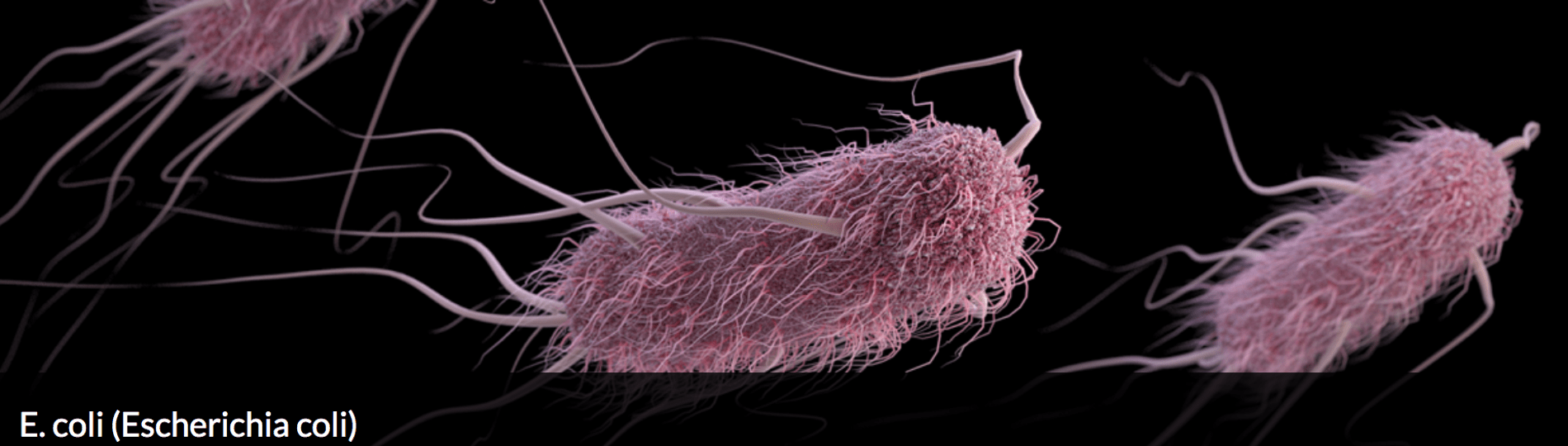
Can the microbiome predict whether we live or die? In an editorial I wrote a number of years ago entitled “Dangerous disappearing act”, I highlighted work by Hayakawa and colleagues that describes how the microbiome of critically ill patients can predict death. More recent work from Finland suggests that life or death can be predicted by the microbiome in the general population. Salosensaari and colleagues uncovered a relationship between certain microbiome characteristics in the human gut microbiome that predicted mortality during a 15-year study in Finland. Interestingly the signature that was most strongly related to mortality was related to the Enterobacteriaceae family – the one that includes E. coli. Of course, Enterobacteriaceae is not alone in this, but overgrowth by E. coli is an example of a pathological transformation of the microbiome that can impact the risk of infection and potentially kill their hosts.
A paper last year in Science and Translational Medicine by Swarte and colleagues described the impact of E. coli overgrowth in patients following organ transplant. E. coli were found to be more abundant in transplant recipients and those bacteria are often responsible for infections of the urinary tract and elsewhere in transplant patients. Along with the expansion of pathogens, transplant patients show a reduction of beneficial butyrate producing microbes, including Akkermansia muciniphila, Bifidobacterium adolescentis, and Eubacterium rectale. Like the Finland study by Salossensari, Swarte found that increased mortality was linked with reduced diversity of the gut microbiome and an expansion of the opportunistic pathogen Enterococcus spp. Although many factors, including antibiotics, predispose transplant patients to dysbiosis, Swarte and colleagues showed that immunosuppressive drugs were by far the most important risk factor for dysbiosis. This finding accords with the idea that a major function of the immune system is to shape a healthy microbiome, a function Foster and colleagues evocatively described as keeping our microbial ecosystem on a leash.
During the process of aging, E. coli abundance also increases, along with increased risk of life threatening E. coli infections. Similar changes happen in sepsis. Sun and colleagues recently showed that the microbiota of septic patients also undergoes an expansion of pathogens, including Enteroccocus, and Proteobacteria (the phylum that includes E. coli and Klebsiella pathogens). Simultaneously, there is a marked reduction in Firmicutes and beneficial Eubacterium and Bifidobacteria species.
The picture that emerges is that as people get sicker, older, and have impaired immunity, the microbiome undergoes dangerous changes, including the loss of beneficial species and an increase in harmful ones. As the leash that controls the microbial ecosystem begins to fray, we see dangerous bacterial overgrowth, loss of diversity, and loss of beneficial species. Whether the link with mortality is causal is an unanswered question. However, it stands to reason that a pathogen-enriched microbiota that generates chronic immune activation and increases the likelihood of severe infections might shorten one’s lifespan.
Categories: Uncategorized

Joe Alcock
Emergency Physician, Educator, Researcher, interested in the microbiome, evolution, and medicine
 EvolutionMedicine
Another great piece, Joe. Very clearly explained. The question is, as I’m sure you are aware, what can be done to slow the fraying of the leash.
Organ transplant patients of course require immunosuppression, but how much, for how long, currently is decided with a fair amount of guesswork informed by periodically measuring levels of immunosuppressive drugs like cyclosporin and tacrolimus, as well as by doing biopsies of the transplanted organ at intervals to look for signs of rejection. Perhaps, out of concern for preserving a proper microbiome, the balance will tip in favor of a little less immunosuppression.
Regarding aging of the immune system, I’ve long wondered whether there would be benefit, with respect to slowing the rise of the risk of cancer, from efforts to keep the thymus functioning a bit longer (if feasible), and I’m now thinking, thanks to your article, that keeping the thymus functional longer might also slow the fraying of the leash that keeps the microbiome in good order. Some new work on the evolution of asynchronous aging ( J. Moored and S. Ravindran, Am Nat 2022, 199[4]:551-563), coupled with an old argument I made (Thymus 1994-1995 24[1]:29-40), suggests there may not be any downside to doing so.
Anyway, thanks for sharing your thoughts on this very stimulating topic.
Paul Turke